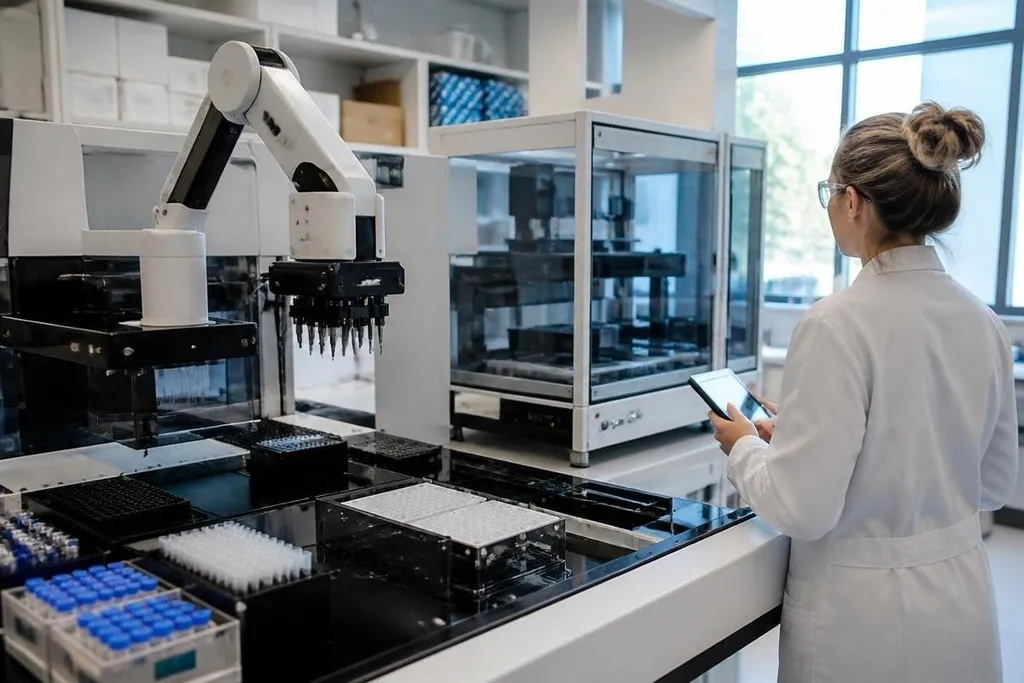
A laboratory robot can already move samples, dispense liquid, run plates, and record results. The harder task is linking those steps so an experiment can continue when a sample changes, a sensor raises an alert, or a run produces an unexpected result. That is where the next gains will come for lab managers planning automation.
- Robots will connect sample handling, testing, and records
- Software will decide what happens after each result
- Human review will remain part of the process
From single tasks to full runs
Many lab robots work inside one part of an experiment. A liquid-handling system moves set volumes into plates. An automated imaging system checks cells or materials.
A separate instrument controls temperature, mixing, or measurement. Each job can work well on its own, but the lab still needs people to move items and check the results between steps.
The next stage is a connected workflow. A robot could receive a sample, prepare it, move it to an instrument, read the result, and send the next instruction to the system. That reduces manual handoffs, which are a common place for delays, labeling errors, and missed records.
This does not mean every lab will need one large robot. Smaller systems connected by software may fit better, especially where equipment comes from several suppliers. The useful change will be the link between machines, not the size of the arm.
Software will decide what happens next
A fixed script works when every sample follows the same path. Laboratory work often changes after a measurement. A result may call for another scan, a new dilution, a longer incubation, or a review by a scientist before the robot continues.
That requires software that can read instrument data and choose from approved next steps. The robot still needs clear limits. It should know which containers it can move, which temperatures are safe, and when a person must approve the next action.
This is where digital records matter. If the system stores the sample identity, settings, timing, and result at each step, a scientist can check how the experiment ran. A robot that moves quickly but leaves weak records creates more work later.
A laboratory robot can record each pipette move, but a person still decides whether the result is fit to use. A report from Robot 24 can place that decision beside the machine, software, and test record, leading into the rules people will set.
People will set the rules
Human staff will still choose the experiment, set limits, inspect unusual results, and deal with samples the system cannot classify. The robot can repeat a process with steady timing, but it cannot decide whether a strange result is useful evidence or a damaged sample without rules and review.
That makes safety and access control part of the design. A lab needs to know who changed a protocol, which version ran, and whether the robot stopped when a condition fell outside its limits. These records matter when results must be repeated or checked by another team.
The open question is how much judgement lab software can handle without making its decisions hard to inspect. A useful system should show the reason for a stop or a change in the run, not hide that choice inside a model nobody can check.
What remains hard
Robots work best with known container shapes, fixed locations, clean surfaces, and repeatable steps. Labs often contain mixed tubes, wet surfaces, fragile samples, and equipment with different control systems. Those details can turn a neat demonstration into a slow setup job.
Sample movement also remains difficult when the robot must avoid contamination. Grippers, pipette tips, waste handling, and cleaning steps all affect the result. A lab manager should ask for evidence from the exact workflow under review, not a video of a different task.
I'd wait for proof that a system can recover from common faults before paying for a large installation. Systems that need a technician after every misplaced tube may save little time.
A practical check before you buy
Use these points when comparing a laboratory robot or planning a pilot:
- Map the handoffs: count every time a person moves a sample, changes a setting, or copies a result.
- Name the exception: write down what should happen after a failed scan, missing label, low volume, or contamination alert.
- Check the records: confirm that the system saves sample identity, timing, settings, and operator changes.
- Test mixed equipment: include the instruments, containers, software, and safety steps used in the real lab.
- Set a stop rule: decide which errors pause the run and which ones require human approval.
The next useful laboratory robot will be judged by the whole experiment, from sample entry to checked result. Before that standard is met, a well-connected set of smaller machines may serve a lab better than one system that promises to do everything.